






ROVE R2-4K Dual Dash Cam Review: The Plate Test, Day and Night
This ROVE R2-4K review digs into the only thing dash cam buyers really care about, which is whether the footage will read a plate when you actually need it to. We went through the full spec sheet, the sensor ROVE actually uses, independent teardown findings, and what 13,000 plus owners report. Short version: the front channel is the best part of this camera, the 4K on the box is doing some marketing work, the rear camera is a clear step down, and the parking mode most people buy this for needs a part thats not in the box.
Key Features
4K front, 1080p rear
The front camera records 3840×2160 at 30fps across a 150 degree view. Rear sits at 1920×1080 and 140 degrees.
Sony STARVIS 2 sensor
An IMX675 behind an f1.5 aperture up front. This is the part doing the heavy lifting once the sun goes down.
5GHz WiFi transfers
Clips move to your phone at up to 20MB/s through the ROVE app instead of trickling over 2.4GHz.
Supercapacitor, no battery
No lithium cell to swell after a car has baked in a July parking lot all afternoon.
How It Actually Performs
Start with the sensor, because it settles most of the argument. ROVE puts a Sony IMX675 STARVIS 2 up front behind an f1.5 lens, and thats a genuinely good low light part. It is also a 5 megapixel sensor, which means it physically cannot capture 3840×2160. The camera shoots at its native resolution and upscales into a 4K file, and independent teardowns have measured exactly that. So read the 4K on the box as a container size, not as true detail. Worth knowing before you buy, and worth knowing that it still outperforms most of the cheap 4K claims it sits next to. On legibility, plates on cars three or four lengths ahead come out readable, which covers most fender benders. Push out to eight or nine lengths and you are interpreting rather than reading. Oncoming traffic at highway closing speeds turns to mush, same as every consumer cam in this class.
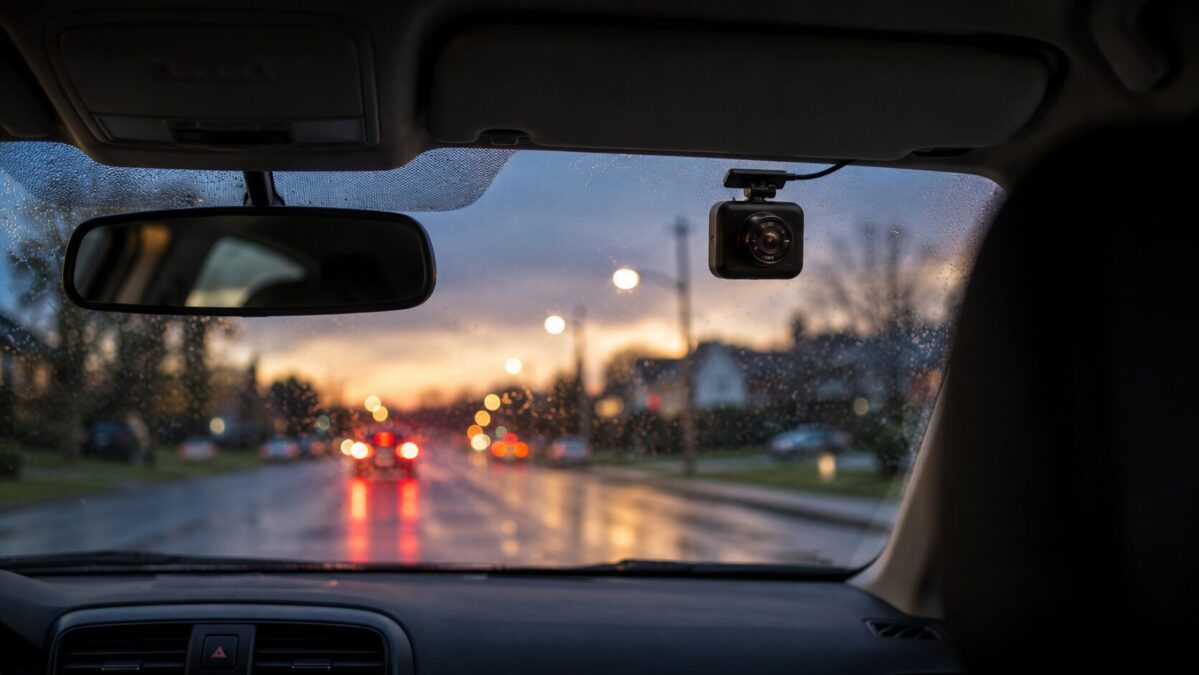
Night is where the STARVIS 2 earns its keep, and this part is not marketing. An f1.5 aperture over a low light sensor holds color under sodium streetlights instead of washing out into the grainy blue grey cheaper cams produce, and oncoming headlights are far less prone to blooming across the frame. It isnt magic. An unlit rural road gives you a cone of headlight and a lot of black, same as anything else. But in town, at night, in the rain, plates on cars stopped at the same light stay legible. Thats the scenario that actually matters if somebody rear ends you.
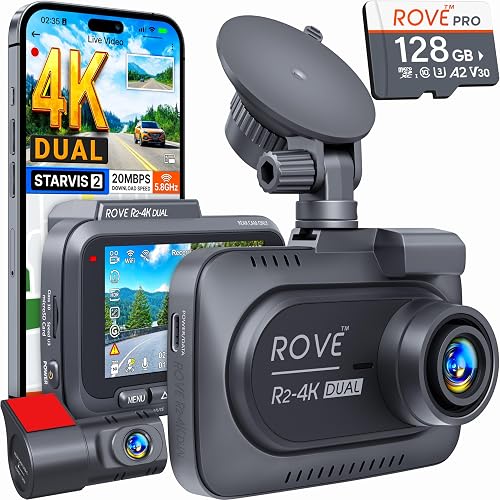
Install is the part nobody warns you about. The front unit is easy. It sticks to the glass behind the mirror and the long USB-C power cable tucks into the headliner and down the A pillar in a few minutes. The rear camera is a different afternoon entirely. ROVE hands you a 6.5 meter extension cable, which is the correct length, and that also means routing the thing end to end through the car, popping headliner trim, down a pillar, and into the hatch through the rubber boot. Budget an hour. Owner reviews are full of people who gave up halfway and left it dangling, and a cable across your back window will drive you up the wall inside a week. The trim tool in the box is better than the flimsy pry bars most kits ship with, and if you are adding other bits to the car while you have the panels off, we rounded up some cheap car gadgets under $30 that earn their space.
And the rear camera is the weak link. 1080p shot through a tinted rear windshield is not reading a plate at night, full stop. Daylight and close range, fine. Anything past that and it is context footage. It proves someone hit you and roughly how fast they were going, not who they were. Vantrue and a few others sell dual kits with a sharper rear channel, though you will pay noticeably more for them, so if rear plate capture is your actual reason for buying a dual cam, this isnt the one.
The app side is better than the category norm. Dash cam apps are usually awful. ROVE’s is merely fine, which counts as a win, and the 5GHz link means a one minute clip lands on your phone in a few seconds instead of the two minute wait 2.4GHz cameras put you through. GPS stamps speed and coordinates into the video, and the free desktop player draws your route on a map next to the footage. If you ever hand something to an insurance adjuster, that map view does more work than the video by itself.
Parking mode is the asterisk. The camera supports three versions of it, 1fps timelapse, motion detection, and impact detection, and every one of them needs constant power. That means ROVE’s hardwire kit, which is not in the box and runs about $29 on Amazon, closer to $40 buying direct. Add a fuse tap you are comfortable installing or a shop visit on top of that. The listing does mention the kit but its buried, and going by the questions on the product page plenty of buyers miss it entirely. Credit where its due on the power side though: the supercapacitor is the right call for a device that lives on a windshield in summer, and ROVE specs built in thermal protection to shut the camera down in high heat. Lithium cells in dash cams are a known failure point and this design skips the problem.
Price deserves a flag. Back when we put together our best dash cams under $100 roundup the R2-4K was scraping in under the line. It has drifted up since, and at $123 it now sits against a different tier of camera. Still decent value, I think, because that 128GB card is a real ROVE PRO card rather than a no name one and you would pay for it separately elsewhere. The budget pick framing just doesnt fit anymore.
Pros & Cons
What We Liked
- Front channel resolves plates at normal following distance, which is the range most incidents happen in
- STARVIS 2 sensor keeps usable color at night and controls headlight bloom
- A real 128GB ROVE PRO card is in the box, so nothing extra to buy on day one
- 5GHz transfers turn grabbing a clip into a ten second job
- Supercapacitor instead of a lithium battery
- GPS speed and route overlay, plus a free desktop player that maps the drive
Worth Knowing
- The 4K is upscaled, the IMX675 is a 5MP sensor and cannot capture true 3840×2160
- Rear camera is 1080p and wont read a plate at night
- Parking mode needs a hardwire kit thats sold separately
- Routing the 6.5 meter rear cable is an hour of popping trim
- Price has climbed past $120, so it is no longer a budget pick
- The 3 inch screen is fine for aiming the lens, not for reviewing footage
Who Should Buy It, Who Should Skip
Buy it if you commute daily, drive for a rideshare or delivery app, or just want a front camera whose footage will hold up when it matters. Buy it if you would rather not think about storage either, because the card is already sitting in the box.
Skip it if rear plate capture is the reason you want a dual cam, that 1080p rear channel will let you down. Skip it if you park on the street, want round the clock monitoring, and have no interest in going anywhere near a fuse box, because the hardwire kit is not optional for that. And if $123 is over your line, our dash cams under $100 picks still get the job done, you just give up the STARVIS 2 sensor to get there.
Full Specifications
| Brand | ROVE |
| Model | R2-4K DUAL |
| Price at review | $123.49 |
| Front resolution | 3840 x 2160 at 30fps (upscaled from the sensor’s native resolution) |
| Rear resolution | 1920 x 1080 at 30fps |
| Front sensor | Sony IMX675 STARVIS 2, f1.5 aperture |
| Field of view | 150 degrees front, 140 degrees rear |
| Screen | 3 inch IPS |
| WiFi | Dual band 2.4GHz and 5GHz, up to 20MB/s |
| GPS | Built in, stamps live speed and route |
| Storage | 128GB card included, supports up to 1TB |
| Power | Supercapacitor, 5V USB-C from the 12V car socket |
| Parking mode | 24 hour, hardwire kit required and not included (about $29 extra) |
| Amazon rating | 4.5 / 5 (13,254 ratings) |
Frequently Asked Questions
Do I need the hardwire kit for parking mode?
How long before the included card starts overwriting?
Will it survive being left in a hot car?
Can the rear camera read license plates?
Is there a subscription?
Final Verdict
The R2-4K DUAL is the dash cam you buy when the front of the car is what you care about. That Sony STARVIS 2 sensor is the thing you are actually paying for, and it holds plate detail under streetlights where most cameras give up, even though the 4K label is upscaled rather than native. Know what you are getting behind you though, the 1080p rear channel is context and nothing more, and parking mode sits behind a $29 hardwire kit that ROVE really should have included at this price. For a commuter or a rideshare driver, easy recommendation. If reading plates out the back window is the whole point, spend more and go dual 2K.
Check Price on AmazonYou might also like:
- Best Dash Cams Under $100 in 2026: 5 That Get the Plate
- 10 Clever Car Accessories You Didnt Know You Needed
- Best Security Cameras With No Monthly Fees in 2026